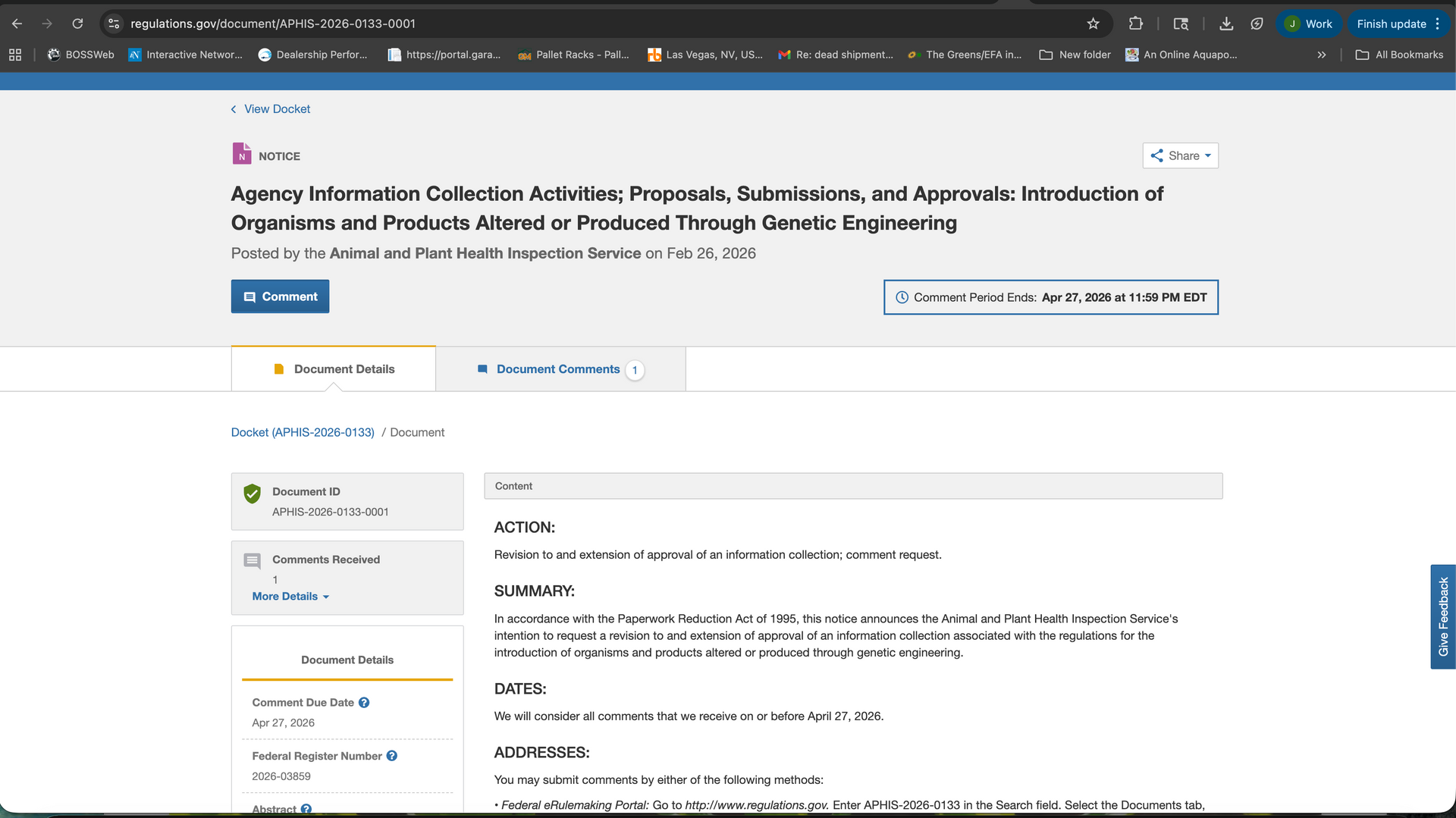
HR 1897 BILL Advances. This Bill will allow Genetic Engineering into the animals of the Endangered Species Act.
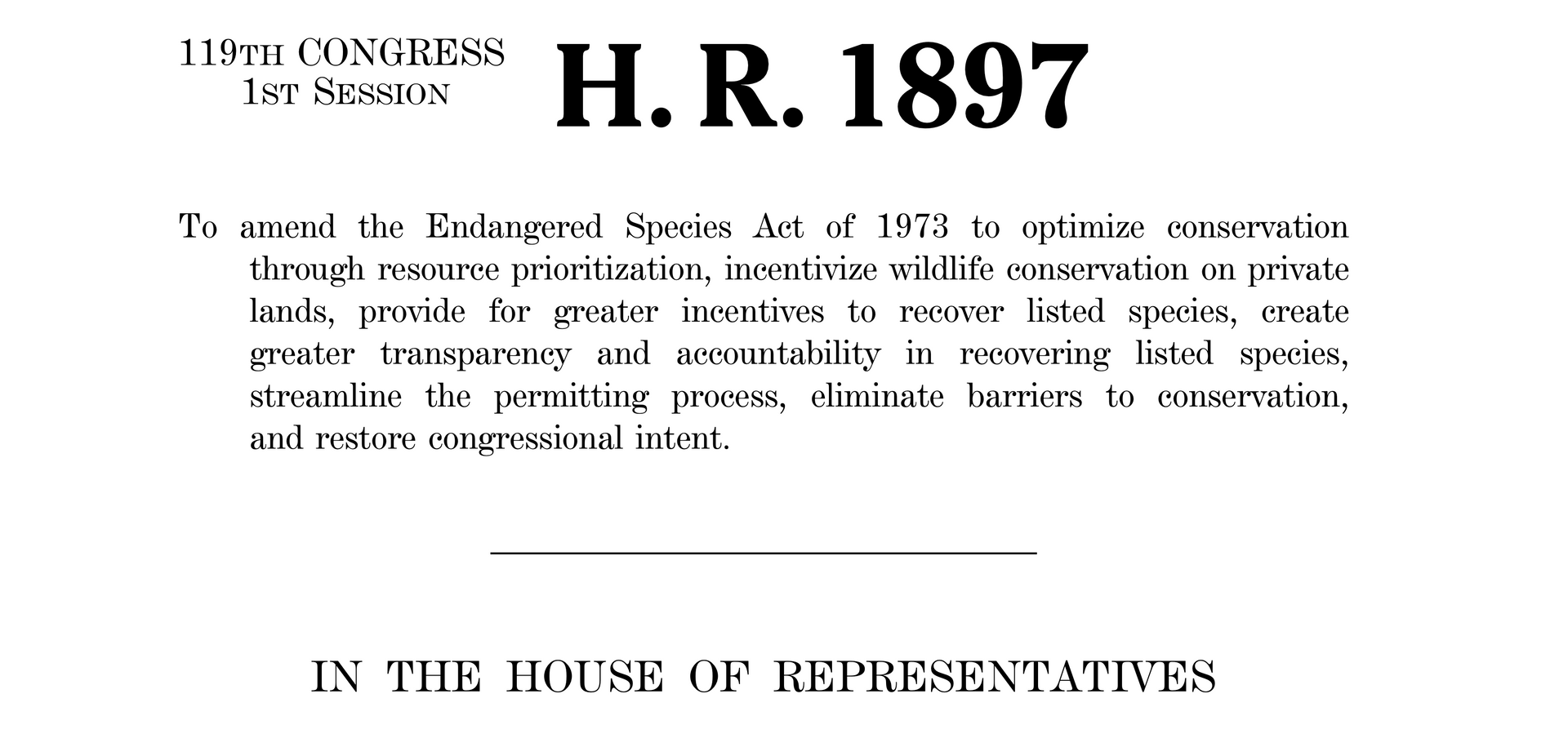
H.R. 1897 isn't a minor amendment. It's a structural rewrite of the Endangered Species Act and how public land managers will organize payments for the practice of "best known science" that will use biotechnology/ genetic Editing in Plants and Animals listed on the Endangered Species Act to "restore nature".
I get it, it's complicated. Please, follow me as I walk you through it.
This “bipartisan” bill, H.R. 1897, if passed as written, will allow the use of biotechnology in animals with little to no public acknowledgment.
To understand the full impact, review my past responses—especially my comments submitted to the U.S. Fish and Wildlife Service regarding their "proposed plans" involving genetic engineering in nature.
These changes are tied to recent updates under the National Environmental Policy Act (NEPA), including what’s called “Phase 2,” which significantly alters how citizens can participate in decisions about public lands and how public funds are used for restoration efforts.
Please take the time to learn what’s at stake.
there are 26 "co-sponsors" listed on hr1897 bills page -
https://www.congress.gov/bill/119th-congress/house-bill/1897/cosponsors <
look into your reps standing.
There’s very little news on this. And if you didn’t know—amending the Endangered Species Act is a big deal. It’s rarely been changed since it was created in 1973.
If you are concerned about biotech use in endangered species happening out of public view?
Contact your U.S. House member’s district office, then your state representative or senator. Reference H.R. 1897, raise concerns about "NEPA exemption for incidental take permits", and ask for a written response to ensure your input is recorded.
Official Bill Details here;
Link to the online status tracker of HR1897.
I can’t post the full text of H.R. 1897 here—it’s too long to reasonably go through. And if you’re searching the bill for terms like “biotechnology” or “genetic engineering,” you won’t find them. That’s exactly the point.
To understand what’s really happening, you have to look at what has changed across the broader regulatory framework—NEPA, APHIS, FDA, USFWS, and relevant Executive Orders—and how those changes interact.
I’ve explained how this works in my responses to the proposed agency rules. But here’s a recap of what this so-called “bipartisan” bill would effectively lock in:
Here are the federal agencies that have recently taken action including hyperlinks:
The Council on Environmental Quality (CEQ) finalized its rewrite of the National Environmental Policy Act called “NEPA Phase 2” rule, which took effect July 1, 2024, Expanding Categorical Exclusions, and now also known in the bill as, "NEPA exemption for incidental take permits." Agencies like Animal Plant Health Inspection Services APHIS, allows for the use of “vaccines for animals” and “Development, production, and release of sterile insects” and projects are able to bypass full environmental review and public input and oversight. On November 13, 2024,USDA/APHIS finalized a biotechnology rule exempting most genetically engineered plants from federal regulation. In 2024, the FDA finalized its policy on Genomic Alterations (IGAs)in Animals, giving self-approval of genetically altered animals with limited transparency.
I have a blast looking into our government—who supports what, and why.
Still figuring it out, but it’s worth the conversation.
Join us if you’re curious.
Cheers,
Josh Wilson
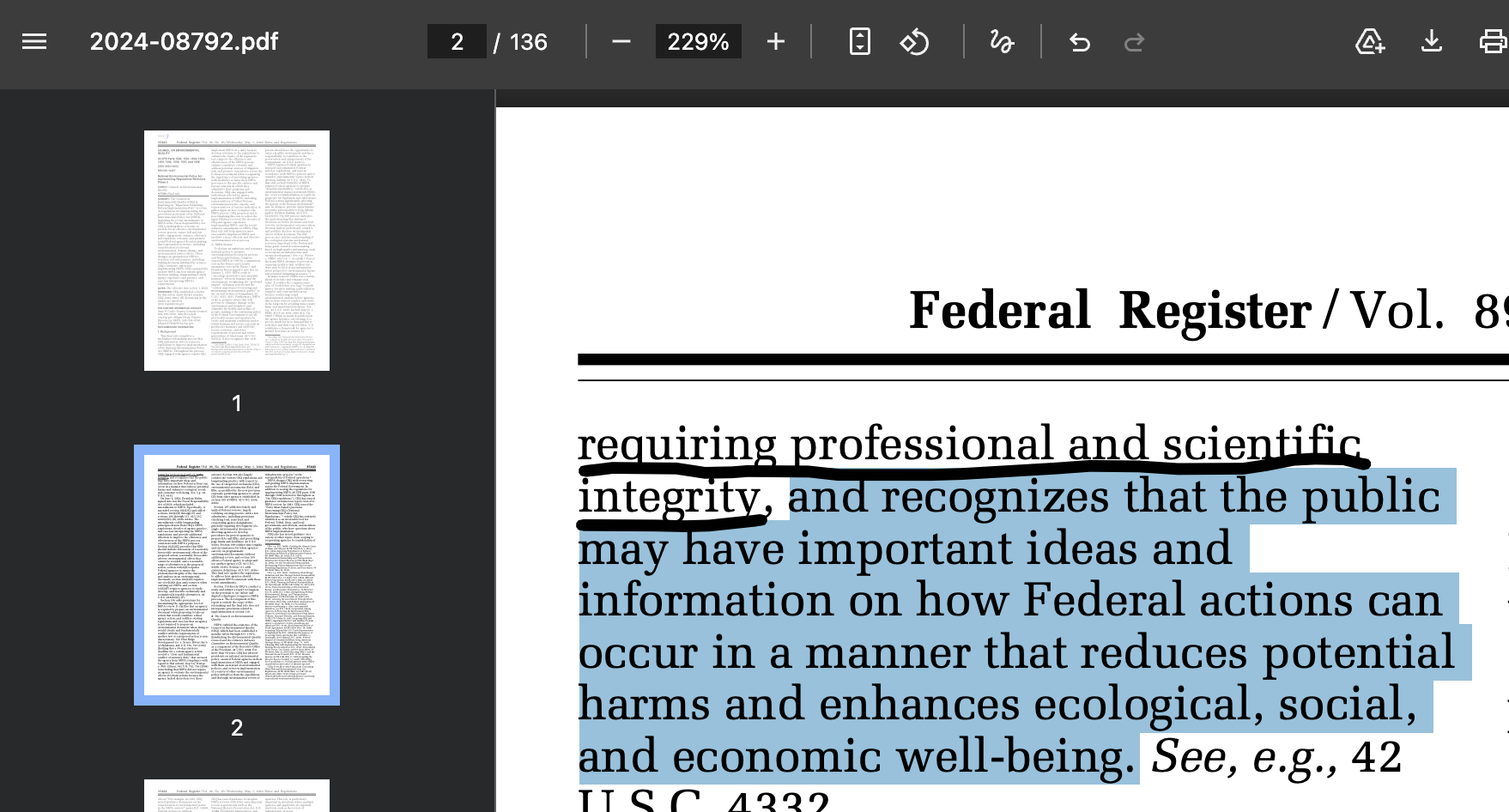
Understand this under lined TEXT of the National Environmental Policy Act, Final rule. It is critical to understand.
- It limit's the public’s ability to have a voice in decisions classified as “scientific.”