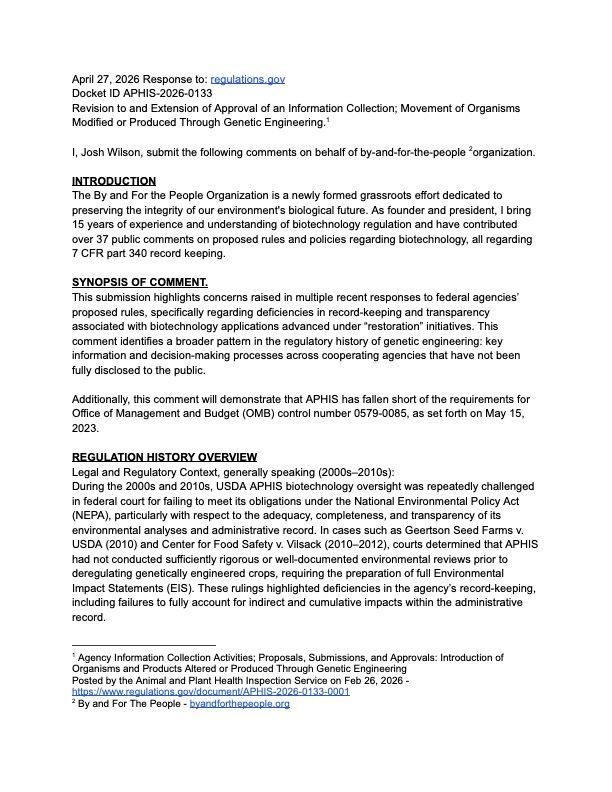
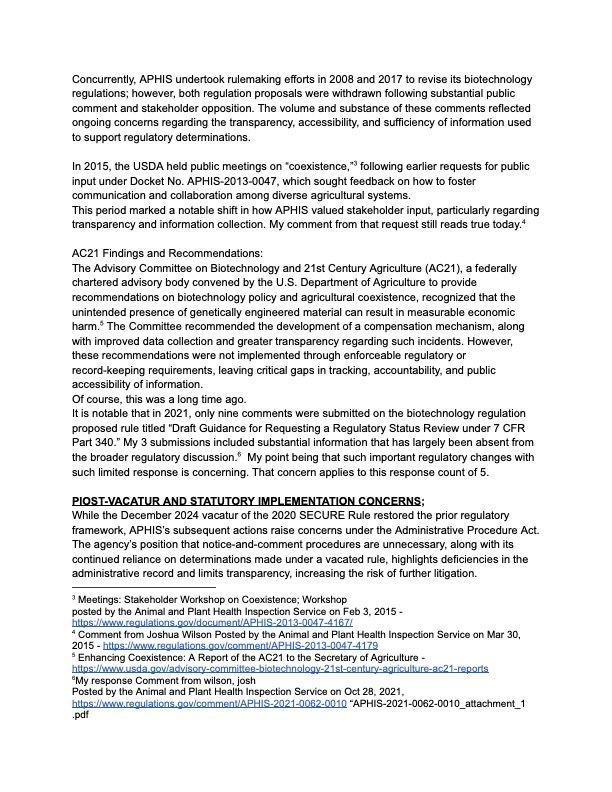
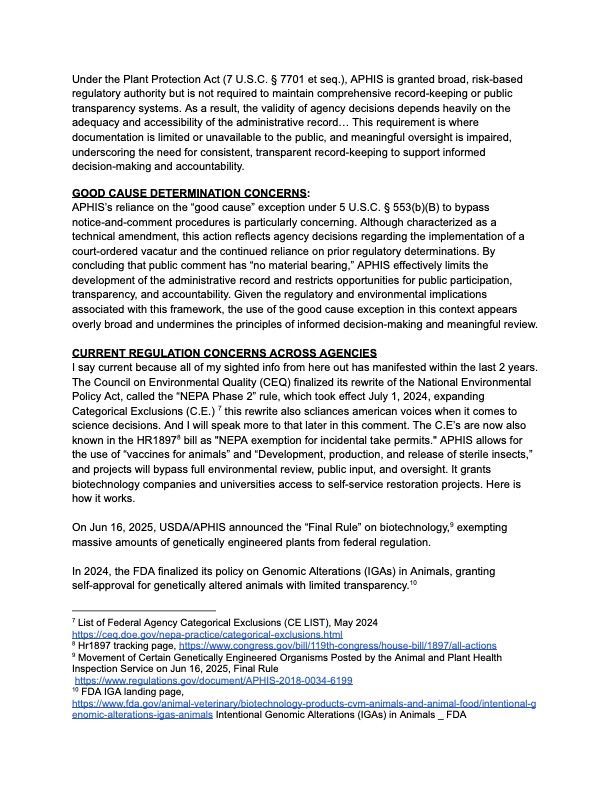
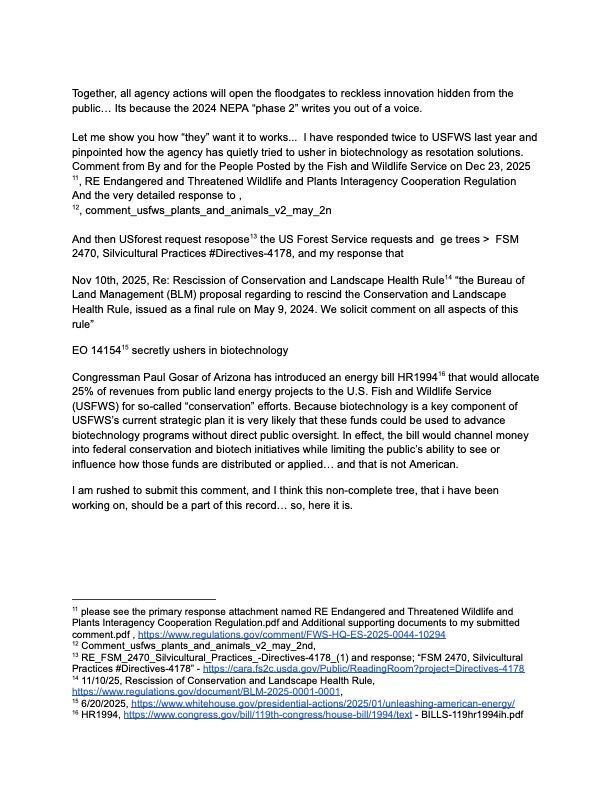
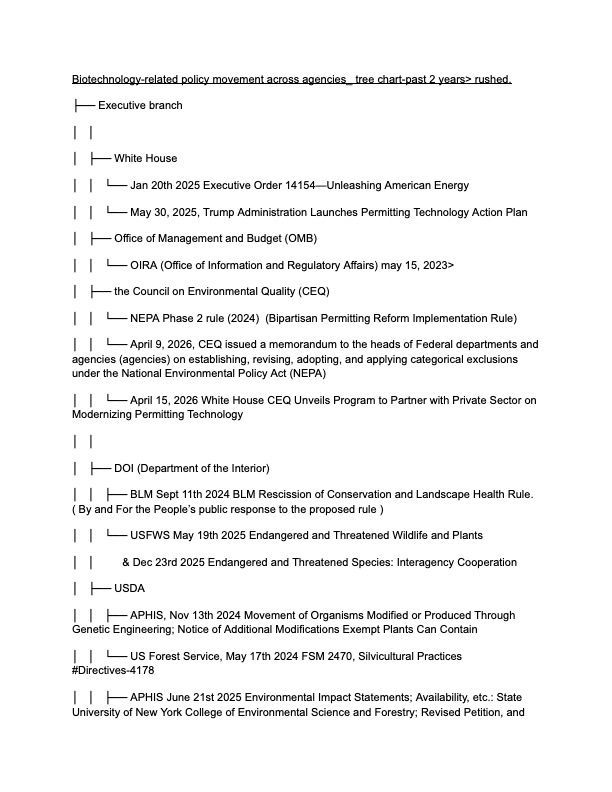
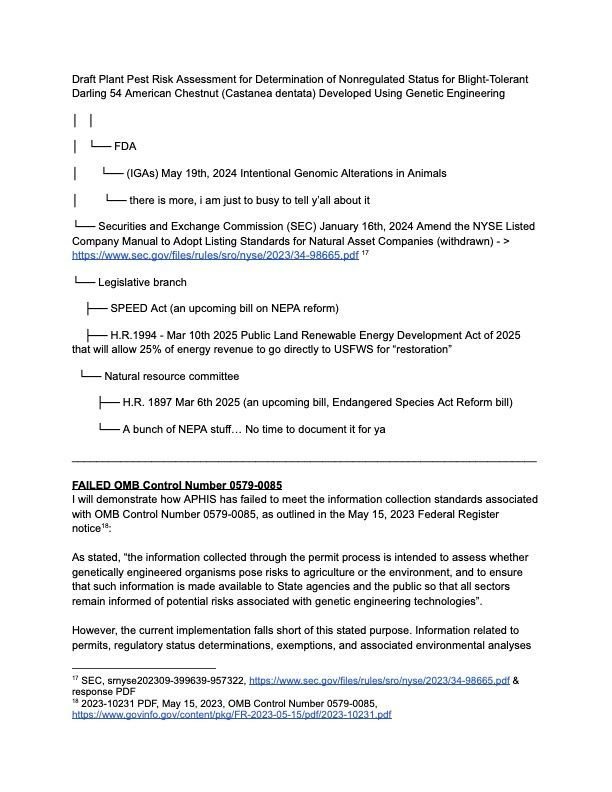
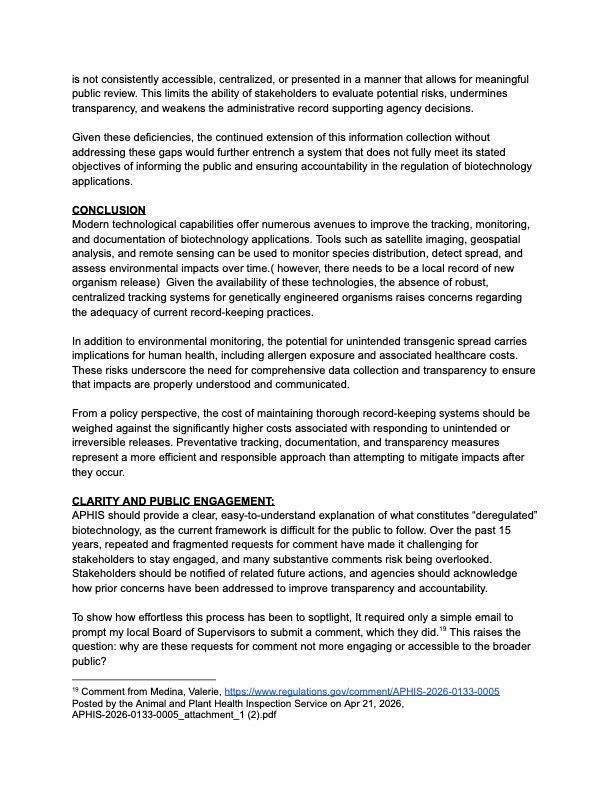
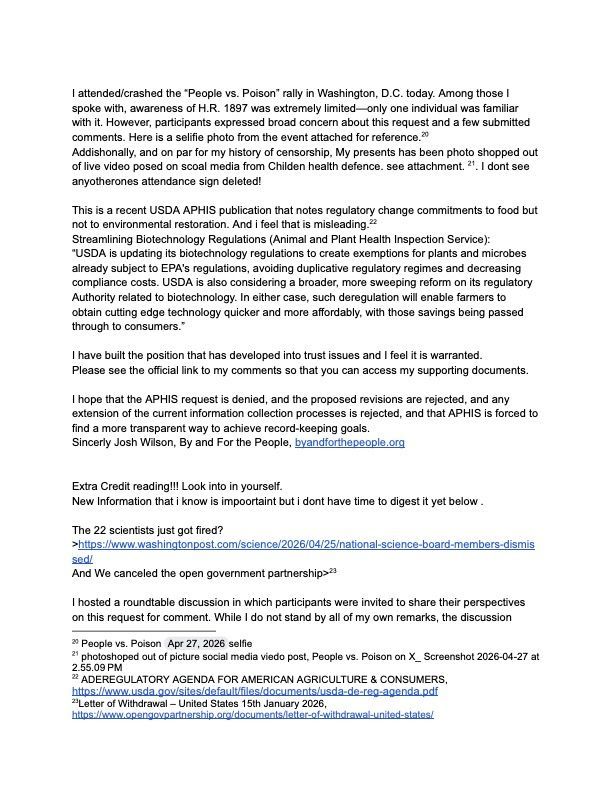
USDA/APHIS wants public feedback on proposed biotech plant regulation changes. Here’s how to submit a comment — and amazingly, two people have done so so far. - I am certain that this is important, so do some research, form your own position, and speak your opinion in this system.
Agency: ANIMAL AND PLANT HEALTH INSPECTION SERVICE (APHIS)
Document Type: Notice
Title: Agency Information Collection Activities; Proposals, Submissions, and Approvals: Introduction of Organisms and Products Altered or Produced Through Genetic Engineering
Document ID: APHIS-2026-0133-0001
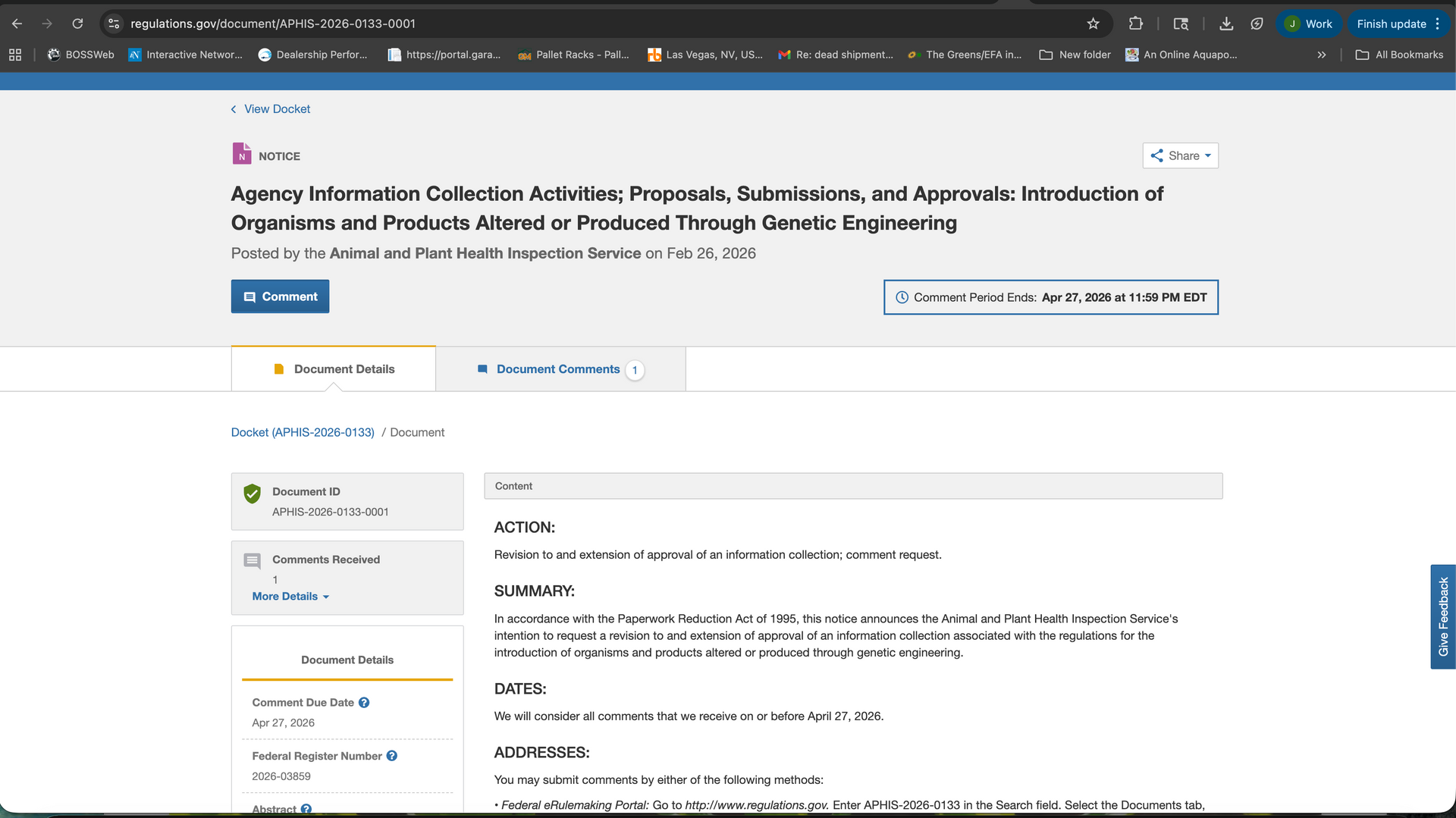
A new federal proposal from the U.S. Department of Agriculture’s Animal and Plant Health Inspection Service (APHIS) is now open for public comment, raising questions about how genetically engineered organisms are tracked and regulated in the United States. You have until April 27th to respond.
"Agency Information Collection Activities; Proposals, Submissions, and Approvals: Introduction of Organisms and Products Altered or Produced Through Genetic Engineering" - https://www.regulations.gov/document/APHIS-2026-0133-0001
As federal biotechnology policy continues to evolve, this comment period represents a key moment for public participation in decisions that will impact agriculture, ecosystems, and regulatory transparency for the rest of our natural biosphere.
This is the April 27th, 2nd and final submission from By and For the People.
Available on record with attachments here, https://www.regulations.gov/comment/APHIS-2026-0133-0007
Below is A low-res text image with no hyperlinks.